topimage

  • ADRC TOP
  • About ADRC
  • Activities
  • Latest disaster
  • Disaster related
  • latest events
  • latest publications

Activity Report: Themes & Issues >> Field Survey

11-17 February 2012 (Dushanbe, Tajikistan)

CIMG3030.JPG  CIMG3077.JPG

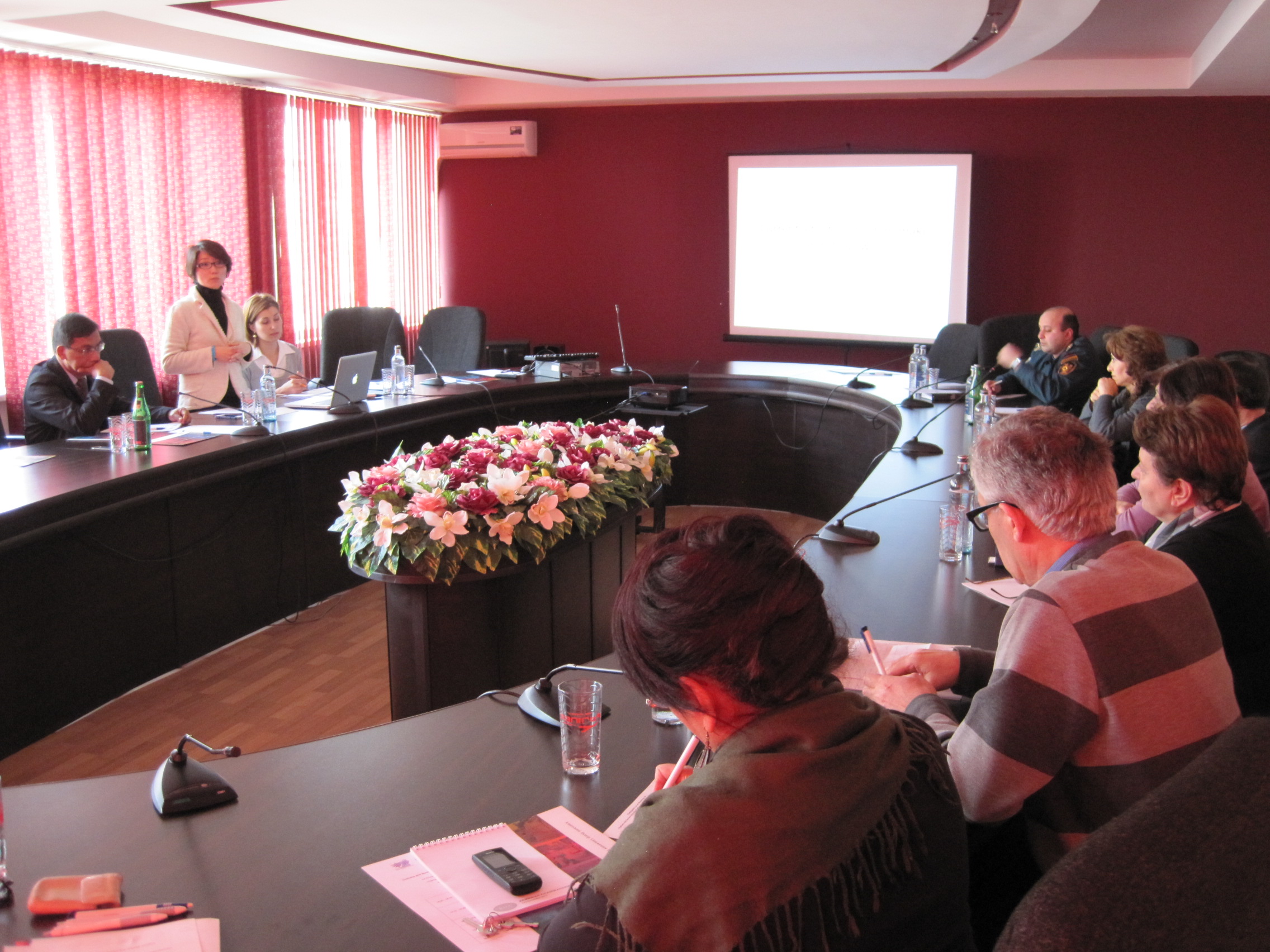
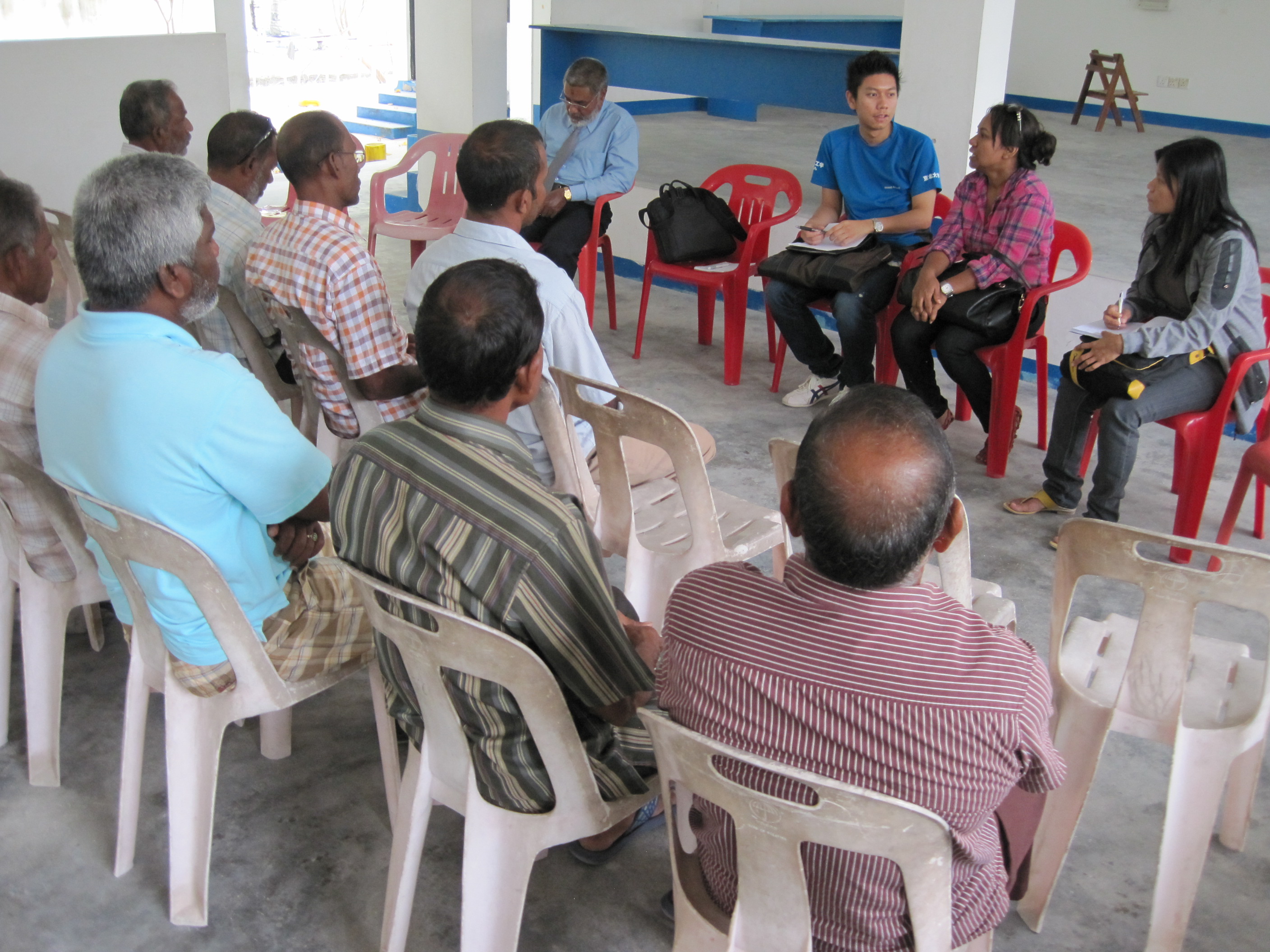
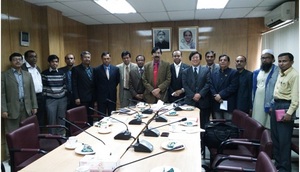
Since 2009, ADRC has initiated a pilot project of DR Policy Peer Review with the aim of developing DRR capacity of ADRC member countries by sharing information and strengthening the relationship among member countries. This year Tajikistan was selected as target country for the review project of the third year. After the submission of country report, reviewer team had visited target countries to conduct interview surveys.

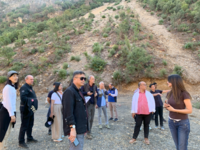
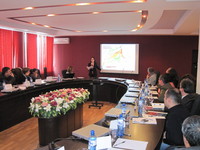
The ADRC reviewer team, composed of Prof. Hiroshi Fukuoka (Associate Professor, Research Center on Landslides Disaster Prevention Research Institute, Kyoto University), Dr. Tai-Hoon Kim (Analyst, National Disaster Management Institute, Ministry of Public Administration and Security, Republic of Korea), Mr. R.M.S. Bandara (Head, Landslide Studies & Services Division, National Building Research Organisation, Ministry of Disaster Management, Sri Lanka) and Ms. Miki Kodama, senior researcher of the ADRC visited Dushanbe, Tajikistan. The team visited various ministries and institutions involving in landslide DRR activities, including Committee of Emergency Situation (ADRC's counterpart in Tajikistan), to examine how they have been making the efforts for reducing landslide disasters by government and non-governmental organizations in Tajikistan. Then, the team conducted field survey at the affected area by the 2009 large-scale landslide disaster in Khuroson district, and prepared a draft report of the survey result with all findings and recommendations. A workshop was held for getting opinion and comments to finalize the report as well as introducing good practices for landslide DRR in Japan, Republic of Korea, and Sri Lanka. It provided a very good opportunity for exchanging opinions each other.

This project aims at developing the mutual learning process among the ADRC member countries instead of one-way learning. After the survey missions, reviewer teams will compile survey reports and send them to target countries and then to ADRC member countries to enhance cross-fertilization.

ADRC would like to express its sincerest gratitude to all of those who have made precious contribution to this project this year.
(2012/02/13 10:40)


Asian Disaster Reduction Center started consultation with relevant orgnizations to explore possible and appropriate cooperation activities in recovery process from the devastating floods in Thailand. Please refer to the ADRC Highlights Vol. 225 at http://www.adrc.asia/highlights/NewsNo225.

(2011/12/06 13:10)

29 August -1 September 2011  Honai, Hue and Ho Chi Minh City, Vietnam

As part of an ongoing study on the use of ICT for disaster preparedness and response in ASEAN countries, ADRC has recently visited Hanoi, Hue and Ho Chi Minh City in Vietnam to interview experts at various government's institutions, including Vietnam Ministry of Agriculture and Rural Department and Ministry of Natural Resources and Environment, and collect information relevant to this subject.

2011_09_01 043.jpgのサムネール画像The use of ICT for disaster preparedness and response has been making a steady progress in Vietnam, in particular weather forecasting and monitoring, risk assessment and risk mapping, early warning to communities and people, etc. Moreover, state-of-art ICT technologies have been widely applied such as broadband networking of observation stations and automatic communication by mobile phone, but mostly on an experimental basis.

While good progress has been made for typical meteorological and hydrological hazards such as typhoon and flooding, relatively less progress has been made for landslide, flash flood, and geological hazards such as earthquake and tsunami. Among them, tsunami warning system (towers) has recently been developed in Da Nang city in Central Vietnam, but more has to be done in view of future tsunami risks in its long coastal line. Likewise, disaster preparedness and response capacity could be further enhanced if it would make more use of such ICT technologies as information sharing system among various institutions, remote sensing, imaging system, real-time measurement sensor, etc.

The result of the study will be used as a basis on which further cooperation is planned. We appreciate greatly kind cooperation extended by the Disaster Management Center (DMC) of the Ministry of Agriculture and Rural Development.  

(2011/9/2 13:10)

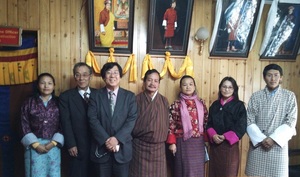
DSC02094 (2).JPG The International Conference on Disaster Management and Cultural Heritage "Living in Harmony with the Four Elements" was held on 12-14 December 2010 in Thimphu, Bhutan. This was the first large-scale international conference to be held in Bhutan; it attracted 55 international participants from 23 countries, as well as 98 participants from around Bhutan, including His Excellency the Prime Minister Lyonchhen Jigmi Y. Thinley, and Ms. Margarita Wahlstrom, the United Nations' Assistant Secretary-General for Disaster Risk Reduction and Special Representative of the Secretary General for the implementation of the Hyogo Framework for Action. This conference was organized by the Department of Disaster Management and the Department of Culture, Ministry of Home and Cultural Affairs, Bhutan, and was supported by UN/ISDR, UNESCO, UNDP, GFDRR, and the World Bank. During this conference, participants discussed the following five themes. The results are reported in the Thimphu Document. a. Policy and Institutional Framework for Disaster Management b. Technical Aspects of Disaster Management c. Traditional Practices for Disaster Risk Reduction d. Post-Disaster Recovery of Cultural Heritage e. Capacity Building and Networking This document will be reported to the next Global Platform in Geneva on 8-13 May 2011, and the Climate Summit for a Living Himalayas Bhutan 2011. The ADRC dispatched Mr. Masaru Arakida, Senior Researcher, to introduce historical disaster management techniques and community-based early warning systems, and to propose an implementation strategy for Bhutan.

DSC02427 (1).JPG

After the conference, he visited Punakha and paid a courtesy call on the provincial governor, investigated damages caused by flooding in 2009, and visited candidate sites for rain gauges along the upstream areas of the Mo-chu River. ADRC will hold a workshop on disaster education and disaster drills for residents, including students and monks, in the Mo-chu area, and also will hold a class to teach people how to make rain and river gauges that can be managed by the local community.

 (2010/12/15 16:40)
1-9, 18-22, December, 2010

Through many of natural disasters experiences, Japan has accumulated knowledge of dealing with disasters and developed its expertise together with advanced policies and technologies in the area of disaster risk reduction. This unique experience provides Japan with many valuable knowledge and expertise that it must now endeavor to share effectively with other members of the international community. From this point of view, this project is launched by the Cabinet Office of Japanese Government last year. Mongolia and Indonesia were selected as target countries of the FY2010 project. The ADRC dispatched mission teams to those two countries to discuss the details of the project activities, including determination of the work schedule.

 On 1-9 December 2010, the ADRC team visited Mongolia and conducted preliminary survey for the proposed project activities on earthquake disaster education. The team visited National Emergency Management Agency (NEMA), two target schools to conduct disaster drill, and other related organizations. Through discussion, the ADRC and NEMA agreed to have pre-training course in Japan at the end of January 2011, and to have workshop of earthquake disaster education in the middle of February 2011. 

On 19-22 December 2010, the ADRC team visited Indonesia to learn detailed ideas on the promotion of disaster education to mass media, the project theme proposed by Indonesia. They concerns mass media casualties caused by pyroclastic flows of Mt. Merapi eruption, and inadequate Tsunami early warning information distribution. The team visited the Indonesian National Board for Disaster Management (BNPB) and The Indonesian Institute of Sciences (LIPI), and interviewed some mass media. Through the discussion, the ADRC and BNPB agreed to have training course in Japan and workshop in Jakarta in February or March 2011. Also, we agreed to conduct survey on mass media's awareness on natural disaster before the workshop.

28 September - 2 October (Padang, Indonesia)

Large-scale inter-plate earthquakes have occurred recurrently in Indonesia, particularly around Sumatra Island, but it has been reported by many experts that such an earthquake is likely to happen off Padang in West Sumatra within thirty years or so.

2010.10.12 008.JPGTo prepare for such large-scale earthquakes, it is of urgent need to establish early-warning and transmission system, development of practical technologies for reduction of building vulnerability and community-based disaster risk management. Hence, two day workshop on 29 and 30 September was organised which coincided with one-year commemoration of the Padang Earthquake on 30 September 2009.

The National Graduate Institute for Policy Studies (GRIPS), the National Research Institute for Earthquake Science and Disaster Prevention (NIED) and the Asian Disaster Reduction Center (ADRC) from Japan, and the Metrological, Climatology and Geophysical Agency (BMKG), the Institute Technology Bandung (ITB) and Andalas University (UNAND) from Indonesia, among others, jointed the workshop.

As a result of discussion, it reached a consensus that future collaboration should focus on three substantive areas, namely early warning for earthquakes, practical technologies for reduction of building vulnerability and community-based disaster risk management.                                                                                         (2010/10/4 13:10)

23-27 May (Sichuan Province, China)

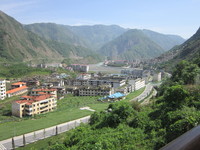
IMG_0081.JPGIRP visited the site of the 2008 Sichuan Earthquake to study the current recovery status and conduct a field survey about the role of the local community in the recovery process over the last 2 years.  
After meeting with reprsentaives of the Civil Affairs Department of Sichuan Provincial Government to learn the government policies on recovery and reconstruction including the Twinning Assistance Program, the research team composed of IRP staff members accompanied by the provincial government officials visited Penghua village located in Mianzhu City. This visit aimed examine the current situation as well as explore the role of local industries, especially wall painting and silk embroidery in the post disaster livelihood recovery process. The team also visited the "Mianzhu Wall Painting Training Center" which was constructed under the Jiangsu Twinning Assistance Program. The team interviewed the village head of Penghua Village, and some local residents regarding the current situation of earthquake recovery.
Then, the research team visited other severely affected areas including Beichuan region, which is home to the ethnic Qiang people. The team interviewed several residents in Jina village where the stone houses are constructed according to the ethnic Qiang traditional style, and also interviewed residents in Shiyi Village located in a high mountainous area where people are engaged in ethnic tourism business especially after the earthquake.
Based on the findings from this field survey and interviews, IRP is now compiling a report titled "International Comparison of Community Governance" which will be of great use for government policy makers engaging in post disaster recovery across countries.

 (2010/06/04 14:00)

15 April 2010 (Manila)

contract signing.JPGIRP facilitated coordination meetings with the Center for Disaster Preparedness (CDP) and the National Disaster Coordinating Council (NDCC) in the Philippines to document recovery lessons from Leyte Landslide of 2006. CDP is a resource center that works with NGOs, people's organizations, communities, and government agencies to enhance capacities in disaster preparedness, mitigation, emergency response, and recovery while NDCC is the national platform for disaster preparedness and emergency response. The meeting with CDP was held at CDP Conference Room, College of Social Work and Community Development (CSWCD) building, University of the Philippines, Diliman, Quezon City. In that meeting, IRP presented the rationale for developing the recovery status report and emphasized the importance of highlighting innovative practices and experience to generate knowledge build-up in recovery. The report will be used as part of the resources in developing the "Guidance Notes for Recovery", which is intended for national and local government to ensure "build back better". One important output of the meeting is the signing of contract between CDP and IRP/ADRC.
After meeting CDP, IRP paid courtesy visits to NDCC and Office of Civil Defense (OCD) to inform these offices of the project. IRP coordinates closely with these government offices to draw more inputs and make the recovery status report more useful to decision-makers and practitioners. The visits resulted in NDCC and OCD's expression of support to the project, especially in organizing a "national consultation" scheduled in November 2010, where concerned stakeholders in the Philippines will be gathered to validate and improve the recovery status report. 

   (2010/04/27 14:00)

1-4 March 2010 (Hanoi, Vietnam)
Sentinel Asia (https://sentinel.tksc.jaxa.jp) implemented the emergency observation by satellite and provided the satellite image date, upon the request from Remote Sensing center, Ministry of Natural Resource and Environment, Vietnam, in response to the flood that occurred in central Vietnam in September 2009.
In order to survey how the provided satellite image data was utilized for disaster response and immediate recovery, ADRC in cooperation with JAXA has conducted the hearing survey to the staff of member the Remote Sensing Center and conducted the field survey to compare the provided satellite image data and actual situation of observed area by satellite.
The results of this survey will be used to the further promote and the disaster management.

(2010/03/30 13:20)

El Salvador, Nicaragua, Guatemala
February 28 - March 12, 2010 

      JICA conducted a follow-up survey for ex-participants of the training course of Disaster Control for Central America, which has been taking place in Japan every year since 2000.

      Although Central American countries are not ADRC member countries, one ADRC senior researcher joined this survey mission in Central America to evaluate the training course, and to learn current efforts which have been taken by them after joining the training course in order to gain good inputs for ADRC's similar training courses.

      Many ex-participants said that they had learned the spirits and culture of disaster management (BOSAI) in Japan, such as focusing more on prevention rather than response, integration of disaster risk reduction into school education, high awareness of communities and individuals for disaster risk reduction, and efforts to hand over the lesson learned from the past disasters to next generation. And learning from these experiences in Japan, they have been conducting various activities after their return home.

      On the other hand, following things are pointed out as the issues to be improved; 1) too many lectures on the Great Hanshin-Awaji Earthquake, 2) less lectures of other disasters, 3) less interactive sessions, 4) not enough time for the questions & answers session, 5) a few chances to visits communities, 6) less time for discussion among participants for their own experiences and what they learned in Japan, 7) some handouts are not translated to Spanish, 8) too much time for interpretation, 9) training schedule should be set for certain period of time every day.

      And they recommended the following points for the future training course, 1) the training should be linked to HFA and regional disaster reduction plan in Central America, 2) there should be a good communication with ex-participants when nominating new participants and conducting pre-course lectures, 3) Action plans should be developed in concrete and achievable manners, 4) Action plans should be introduced in a meeting right after their return home, 5) all documents in the training course should be distributed in digital data, 6) there should be some opportunities and places to exchange information and experiences among ex-participants, 7) the second phase training course should be developed for ex-participants after they conducted various activities.

      JICA will make a final report shortly including the interview result to the ex-participants.

(2010/3/25 16:40)

1-3 December 2009 (Manila, Philippines)
 
The ADRC has been collaborating with the Japan Aerospace Exploration Agency (JAXA) to promote a disaster reduction project using satellite imaging data in the Asian region.
On September 26, Typhoon Ketsana (Japan Meteorology Agency designation: No. 16) swept across the Central Luzon in the Philippines. The typhoon brought the extremely heavy rainfall to Metro Manila or the National Capital Region resulting in extensive flood damages..
Upon request from the Philippine Institute of Volcanology and Seismology (PHIVOLCS), ADRC coordinated the emergency observation by earth observation satellite agencies and then satellite data was provided to PHIVOLCS by Sentinel Asia.
The ADRC mission visited PHIVOLCS, Office of Civil Defense, National Disaster Management Center and Mines & Geosciences Bureau to conduct a follow-up survey on the use of the satellite data. The mission also conducted a on-site survey to compare the satellite image with actual situation in Metro Manila.  


(2009/12/04 17:30)

4-8 October 2009(Padang, Indonesia)

ADRC sent a team of two senior researchers to Indonesia to make an immediate assessment of areas stricken by the earthquake of 30th September off Sumatra Island. Mr. Masaru Arakida and Mr. Tetsuo Ibaraki, both from ADRC, visited Padang City, Pariaman City, Padang-Pariaman District of West Sumatra Province from 5 to 7 October 2009. Their primary objective was to explore how ADRC and other relevant organization could help disaster stricken areas recover and rebuild their communities based on their assessment. The following is a snapshot of the mission.

report_in_indonesia_1009E.pdf

(2009/10/22 16:40)

10-18 October 2009 (Kathmandu, Nepal)

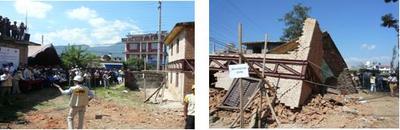
The Asian Disaster Reduction Center has been carefully planned and prepared "Pull Down Test" for the last one year as a big event of "Earthquake Risk Reduction and Recovery Preparedness Program for the South Asian Region".  The first "Pull Down Test" of the existing non-retrofitted  building was conducted on 15 October in Katmandu, Nepal.
This time, a 30-years old existing building was pulled until falling. The main purposes of the experiment are to enhance awareness of the threat of earthquake by observing actual situation how the building is collapsed when a big earthquake occurs, and also to examine the strength of an old house. Further, we will conduct the second "Pull Down Test" on 2 November for the purpose of verifying the effectiveness of the retrofitting by the JAKETTING method.
Many participants from Nepal government, United Nations, the ERRP member countries, and local communities observed the result of the experiment with particular interst. As the tensility was carefully enlarged, the cracks on the wall of the house became bigger, and finally the house was collapsed in a moment. The participants could realize well the vulnerability of the existing buildings to the big earthquakes. Further, local newspapers covered the event giving a great deal of space, which contributed to raiging people's awareness of disasters.

ERRP200910.jpg
(2009/10/22 19:10)
relocation site.JPG1-4 August 2009 (India)
International Recovery Platform (IRP) Secretariat visited Gujarat State, India to survey recovery status on Gujarat Earthquake (Jan. 2001) . The survey includes observing Relocation Sites and collecting fruitful information through meeting with local government officials and NGOs which are implementing recovery programs.

Further information about the survey shall be uploaded in the IRP website. (http://www.recoveryplatform.org/)
 (2009/08/01 14:20)
29-31 July 2009 (New Delhi, India)

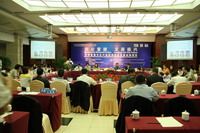
The International Recovery Platform (IRP), UNDP-India, ADRC, NDMA-India, and SDMC jointly organized the Regional Conference on Earthquake Risk Reduction held at India International Centre, New Delhi, India on July 29-31, 2009. Over 200 participants, including representatives from Earthquake Risk Reduction and Recovery Preparedness Programme (ERRP) country teams, technical experts, practitioners, and relevant stakeholders, gathered during the three-day to discuss experiences, share knowledge, and facilitate technical cooperation.
[more]
 (2009/08/12 14:00)

28 February - 19 March 2009 (Dhaka, Bangladesh)
JICA (Japan International Cooperation Agency) started the survey to formulate the comprehensive support program for Bangladesh where it has suffered many natural hazards. The program may include some yes-loan-financed projects. The survey focuses on water management including flood and cyclone and earthquake management as a sub-sector. Based on the survey, some projects which require urgent implementations would be considered and formulated when necessarily. The duration of the survey mission in Bangladesh is from 28th Feb to 19th March. Koji Suzuki, Executive Director of Asian Disaster Reduction Center participated in the survey mission. The mission visited the Ministry of Food and Disaster Management that is the Bangladesh counterpart government organization of Asian Disaster Reduction Center and Bangladesh Disaster Preparedness Center that Asian Disaster Reduction Center has long been working with. The mission had meetings at Ministry of Water Resource, Dhaka Geophysical Observatory, Dhaka Fire Brigade, BRAC University, Bangladesh University of Engineering & Technology, UNDP and ADB. It also made some filed surveys on construction sites in Dhaka guided by Public Works Department and some river sites.

(2009/03/12 13:10)

no11.JPG25-30 May, 2008 (Sichuan, China)

The Asian Disaster Reduction Center (ADRC), in cooperation with the Disaster Reduction and Human Renovation Institution (DRI), investigated ways for the lessons and experiences of the Great Hanshin-Awaji Earthquake with regard to recovery and restoration of disaster-stricken areas to be utilized in response to the Sichuan Province Earthquake that struck Wenchuan County in China's Sichuan Province (GLIDE no. EQ-2008-000062-CHN) on 12 May 2008. To conduct this investigation, ADRC Senior Researchers spent 25-30 May visiting the cities of Dujiangyan and Mianzhu in the disaster-stricken area to assess the situation on the ground and to share nformation with officials from the Sichuan Provincial People's Government, the China Earthquake Administration, and the National Disaster Reduction Center (NDRC) of the Ministry of Civil Affairs.

Further information, please refer to : http://www.adrc.asia/highlights/NewsNo183

(2008/06/03 20:00)

Archives by Month

2012
2011
2010
2009
2008